 English
 Español
Contact Us For
One-Stop Service
One-Stop Service
Please fill in your detailed needs, our sales staff will revert to you shortly.
By Wenzhou Sing-rui International Trade Co., Ltd. | Published: March 2026
If you've been in the shoe or bag manufacturing business for any length of time, you know the familiar struggle:
What if there was a material that gave you the surface of genuine leather at close to the price of synthetic?
There is. It's called split leather with genuine leather surface—and it's changing how smart manufacturers source their materials.
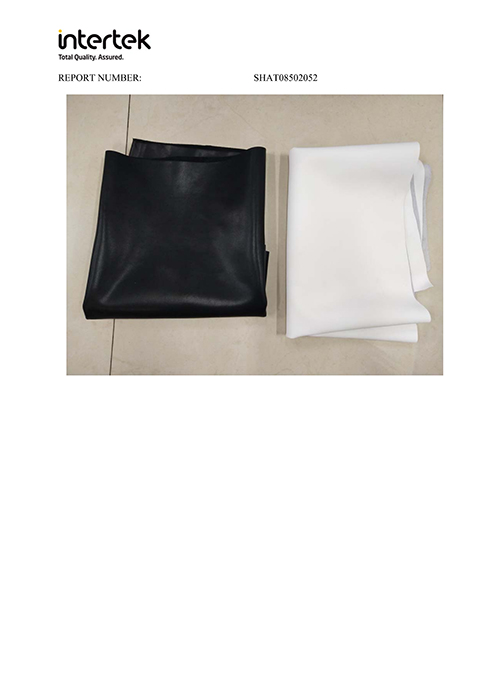
Look at these two material samples:
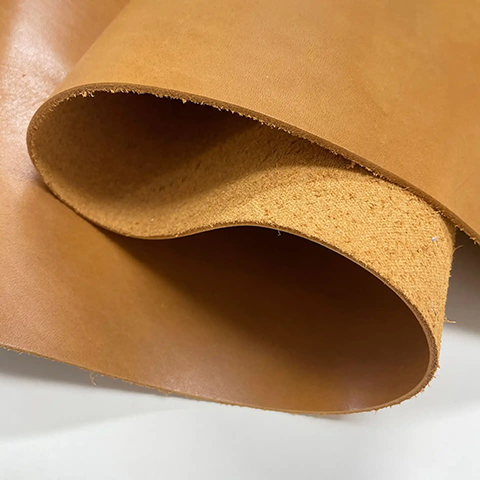
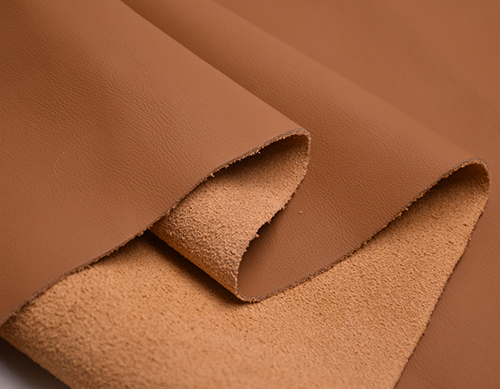
Which one is genuine leather?
If you guessed wrong, you're not alone. Most manufacturers—and more importantly, most consumers—can't tell the difference when the surface is genuine leather.
Here's the truth: Both samples have a genuine leather surface. The difference is what's underneath:
| Sample | Surface Layer | Backing Layer | Cost |
|---|---|---|---|
| A | Genuine leather (0.3-0.5mm) | Full genuine leather | Higher |
| B | Genuine leather (0.3-0.5mm) | Split leather | 40-50% less |
What it is: The full thickness of the hide, from grain to flesh side
Best for: Luxury goods, products that need to last decades
Cost: Highest
Trade-off: You're paying for thickness you may not need
What it is: The lower layers after top-grain removal
Best for: Casual items, products with coatings or coverings
Cost: Low to mid-range
Trade-off: Surface quality is inconsistent; often needs heavy finishing
What it is: 100% man-made materials (PU, PVC)
Best for: Vegan products, disposable fashion, cost-sensitive items
Cost: Lowest
Trade-off: Lacks natural grain, can feel "plastic-y," doesn't develop patina
What it is: Genuine leather surface bonded to split leather backing
Best for: Mid-range to premium products where cost matters
Cost: 50-60% of full genuine leather
Advantage: Genuine leather where it counts—the surface
When a customer picks up a handbag or tries on a shoe, here's what they actually evaluate:
Notice what they DON'T evaluate: The thickness of the backing layer. The composition of the cross-section. The technical details of the hide split.
This is why split leather materials work so well in the real world: you're giving customers what they actually notice and care about.
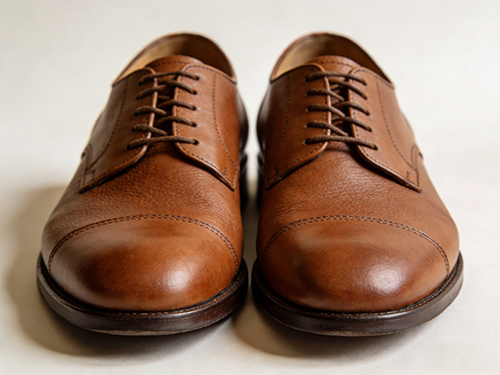
Scenario: A mid-range dress shoe brand wants to move from synthetic to a more premium feel without doubling their material cost.
Solution: Split leather for uppers with genuine leather surface
Scenario: A bag manufacturer wants to offer a "genuine leather" line alongside their synthetic options.
Solution: Split leather materials for main panels and flaps
Scenario: A factory wants to sell to European buyers who demand REACH certification.
Solution: Certified split leather materials
| Material Type | Cost Index (Genuine = 100) | REACH Certified? | Consumer Perception |
|---|---|---|---|
| Full Genuine Leather | 100 | ✓ When tested | "Premium" |
| Top-Grain Leather | 120-150 | ✓ When tested | "Luxury" |
| Standard Split Leather | 40-50 | ✗ Usually not | "Mid-range" |
| Standard Synthetic | 30-40 | ✗ Varies | "Budget/Vegan" |
| Split Leather with Genuine Surface | 50-60 | ✓ Yes | "Genuine leather look" |
For a manufacturer producing 10,000 pairs of shoes annually, switching from full genuine leather to split leather materials could mean $50,000-$80,000 in annual material cost savings—without changing what the customer sees and feels.
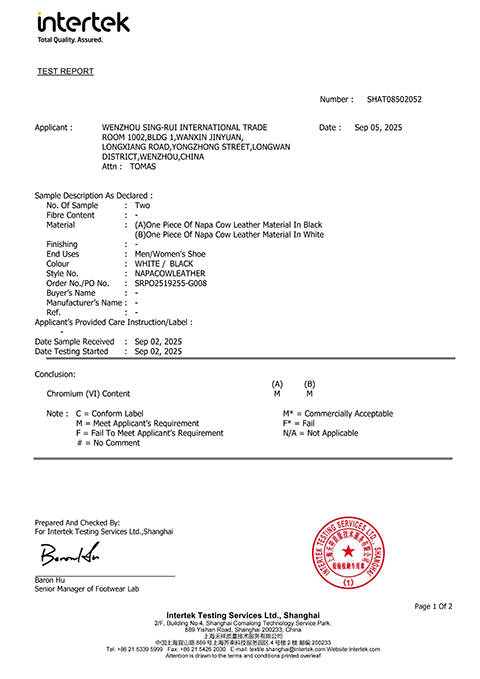
We don't just claim our materials are good—we prove it.
Every batch of our split leather products is tested for:
If you're worried about explaining this material to your customers, here's a simple script:
"Our products use a genuine leather surface for the authentic look and feel your customers want. The backing is engineered for durability and cost-effectiveness—so you get premium appearance without the premium price tag."
Or, even simpler:
"Genuine leather surface. Smart construction."
Yes—because the surface your customers touch is genuine leather. Industry standards typically classify materials based on the visible surface.
For most applications (shoes, bags, accessories with moderate wear), durability is excellent. For high-wear industrial applications, full genuine may still be preferred.
Absolutely. Our materials come with REACH 242-item test reports and hexavalent chromium certification.
Yes—especially when positioned correctly. Italian manufacturers are already using it. The key is focusing on what matters: the surface quality they see and feel.
Split leather is a natural leather product from a lower layer of the hide. Bonded leather is made from leather scraps bonded with adhesives—it's lower quality and less durable.
In a competitive market, success comes from making smart sourcing decisions. Split leather with genuine leather surface offers:
✅ Genuine leather surface — What customers actually see and touch
✅ 40-50% cost savings — Compared to full genuine leather
✅ Full certification available — REACH, hexavalent chromium tested
✅ Versatile applications — Shoes, bags, accessories
✅ Proven market acceptance — Used by Italian manufacturers
Contact us today to:
Website: www.sing-rui.com
Tags: split leather vs genuine leather, cost effective leather material, split leather for shoes, genuine leather alternative, split leather supplier, REACH certified split leather, shoe manufacturing materials, bag making supplies