 English
 Español
Contact Us For
One-Stop Service
One-Stop Service
Please fill in your detailed needs, our sales staff will revert to you shortly.
For decades, shoe and bag manufacturers have faced a familiar dilemma when sourcing materials: genuine leather offers premium quality but comes with a high price tag, while synthetic leather is affordable but often lacks the authentic look and feel that customers demand.
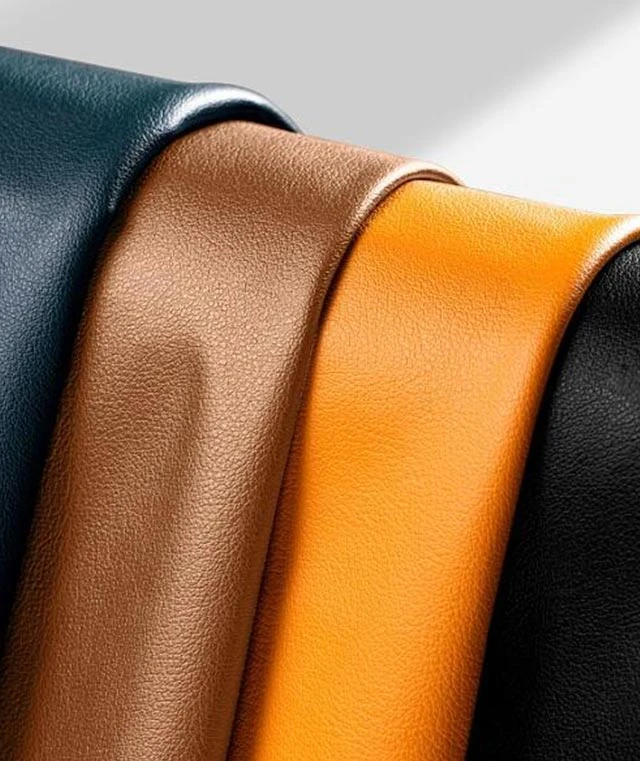
Enter leather-faced split leather—often called "贴皮" in Chinese manufacturing—a hybrid material that combines a thin layer of genuine leather with a split leather backing. This innovative solution delivers the aesthetic appeal of real leather at a fraction of the cost, making it an increasingly popular choice among manufacturers worldwide.
In this article, we'll explore why leather-faced products are gaining traction—even among traditional Italian leather users—and how they can help your business balance quality with profitability.
When we talk about genuine leather, it's important to understand what this term actually means in the industry. Contrary to popular belief, "genuine leather" is not the highest quality leather available—it's actually a specific grade -10.
Genuine leather is made from the lower-middle layers of a hide, typically the split layer that remains after the top-grain has been removed -4. It undergoes a tanning process that improves its flexibility and durability, resulting in a product suitable for mid-range accessories -4.
Key characteristics of genuine leather:
Better durability than synthetic alternatives -4
Retains some natural texture of the hide -4
Develops a patina over time with proper care -4
Higher cost than split leather or synthetics -4
Split leather comes from the lower layers of a hide after the top grain has been separated -4. It's a versatile material that's more affordable but less durable than top-grain or genuine leather -4-5.
The manufacturing process involves:
Splitting the hide into layers—the top layer becomes higher-grade leather
Tanning the split layer using chromium or vegetable methods
Finishing with synthetic coatings or embossing to enhance appearance -4
Split leather is often described as having moderate durability and being prone to wear—it can crack and peel faster than genuine leather -4-5. However, these limitations are significantly addressed when split leather is combined with a genuine leather facing.
Synthetic leather (also called faux leather or vegan leather) is a completely man-made material designed to mimic the appearance of real leather. The market for synthetic leather is experiencing significant growth, driven by demand in vegan fashion and automotive industries -1. From August 2024 to August 2025, synthetic leather saw a 78% increase in search volume -1.
However, traditional synthetic leather has limitations:
Lacks the natural grain and breathability of real leather
May not develop the same patina or character over time
Can have a plastic-like feel that discerning customers notice
Leather-faced split leather—often referred to as "贴皮" in Chinese manufacturing—combines the best of both worlds. A thin layer of genuine leather (usually from lower-grade or recycled sources) is bonded to a split leather backing, creating a material that:
Looks like genuine leather on the visible surface
Costs significantly less than full genuine leather
Performs better than standard synthetic leather
Uses resources efficiently by maximizing hide utilization
Here's a surprising fact: many Italian genuine leather customers have already started using leather-faced products. This isn't a compromise—it's a strategic business decision.
Italy has long been synonymous with premium leather goods. Yet even in this quality-focused market, manufacturers recognize that:
Cost pressures are real — End consumers want luxury looks at accessible prices
Sustainability matters — Using every part of the hide reduces waste
Performance requirements vary — Not every product needs full-grain durability
Aesthetic expectations can be met — Modern bonding technology creates seamless surfaces
When Italian brands—known for their discerning standards—adopt leather-faced materials, it signals a significant shift in the industry.
Highest cost due to material quality and tanning processes -4
Used in luxury items where durability and longevity are priorities -4
Long-term investment that can last decades with proper care -4
Low to mid-range cost -4
Ideal for casual wallets, belts, and fashion bags -4
Provides cost-effective option without compromising design -4
Price point: Between genuine leather and standard split leather
Appearance: Genuine leather surface = authentic look and feel
Durability: Enhanced by the split leather backing
Versatility: Suitable for a wide range of applications
For manufacturers and wholesalers, this translates to:
Higher margins on finished products
More competitive pricing in the market
Ability to serve both mid-range and premium segments with similar materials
When sourcing materials for European markets, compliance with REACH regulations is non-negotiable. REACH (Registration, Evaluation, Authorisation and Restriction of Chemicals) is the European Union's framework for chemical safety.
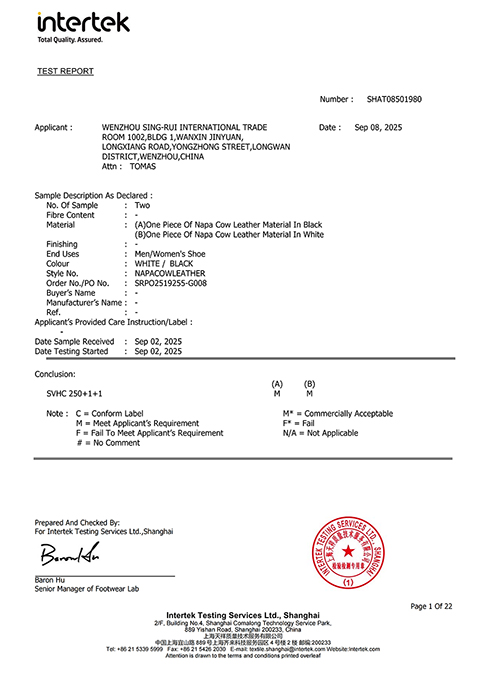
Our leather-faced products have successfully passed REACH 242-item testing—comprehensive screening that covers:
Heavy metals and toxic elements
Phthalates and plasticizers
Flame retardants
Solvents and VOCs
Dyes and colorants
And hundreds of other restricted substances
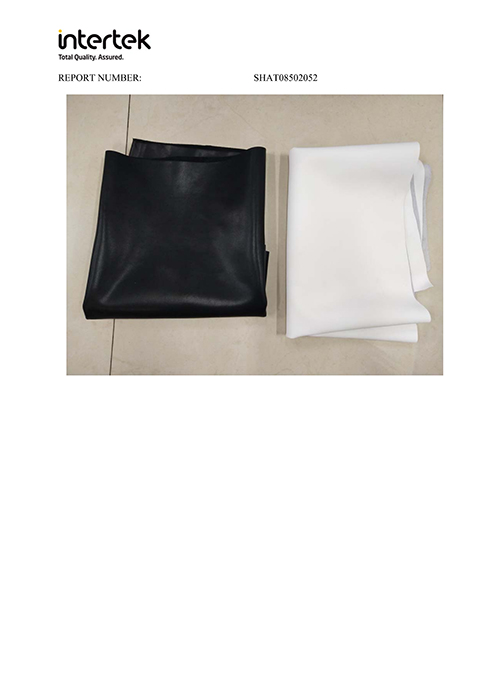
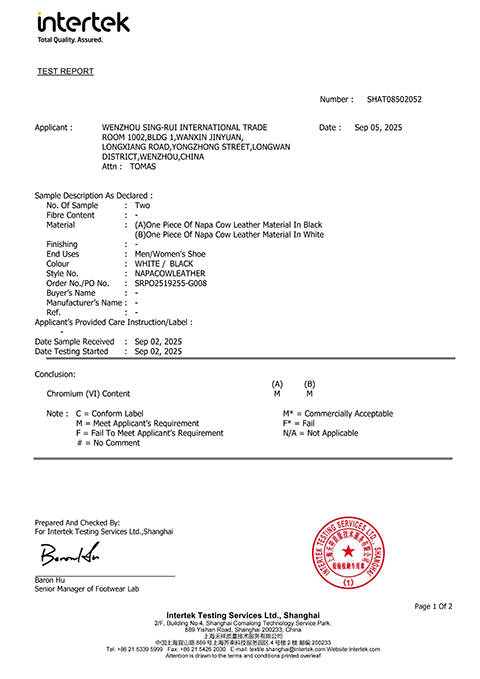
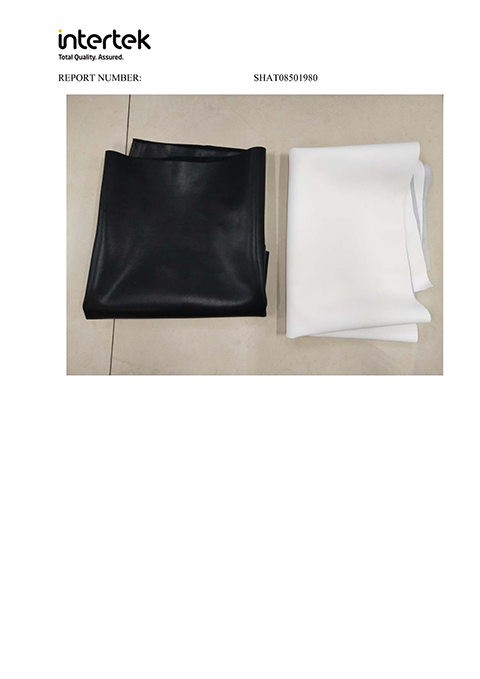
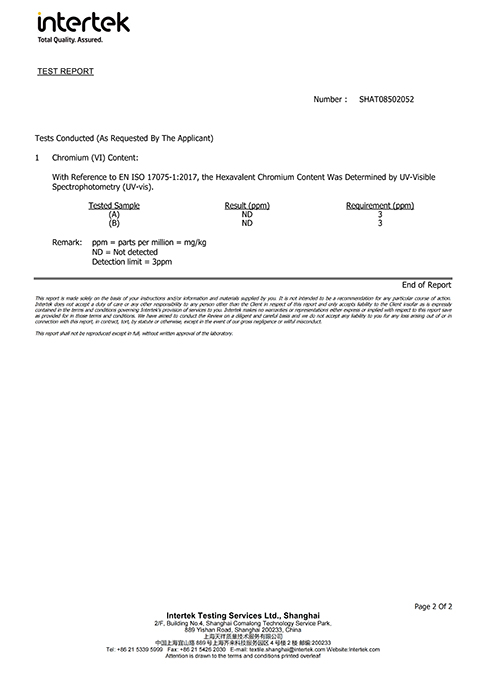
Hexavalent chromium (chromium VI) is a particular concern in leather products. It's a toxic compound that can cause skin allergies and more serious health issues -6. The EU REACH regulation limits hexavalent chromium to less than 3 mg/kg in leather products -6.
Our leather-faced products have been tested and certified for:
Hexavalent chromium content: Below detectable limits
Compliance with EU standards: Meeting or exceeding REACH requirements
Safety for end consumers: Peace of mind for your customers
For manufacturers and wholesalers, certified materials offer:
Market access — Compliance with EU/US regulations opens doors
Brand protection — Avoid recalls or reputational damage from unsafe products
Customer confidence — Buyers increasingly demand proof of safety
Competitive advantage — Many suppliers can't offer this level of certification
Split leather upper dress shoes represent a significant market opportunity. Data from阿里巴巴国际站 shows consistent buyer interest in this category, with high-demand countries including Pakistan, Turkey, and Algeria -8.
Benefits for shoemakers:
Consistent surface appearance across production runs
Good durability for uppers and decorative elements
Cost savings compared to full genuine leather
Suitable for both casual and dress shoe styles
For handbags, wallets, and belts, leather-faced materials offer:
Luxurious appearance that customers can see and feel
Flexibility for various design applications
Abrasion resistance suitable for daily use
Value positioning that appeals to budget-conscious consumers
While less common, leather-faced materials are also finding applications in:
Furniture upholstery where cost matters
Automotive interiors for non-wear surfaces
Decorative trim pieces that need leather appearance
Ask yourself these questions:
| Question | If Yes | If No |
|---|---|---|
| Does the product face heavy daily wear? | Consider genuine leather | Leather-faced may work |
| Is cost a primary concern? | Leather-faced is ideal | Explore premium options |
| Does the product need authentic leather appearance? | Leather-faced delivers | Synthetic may suffice |
| Are you selling to EU markets? | REACH certification essential | Verify local requirements |
When sourcing leather-faced materials, verify:
Testing documentation — Request REACH and hexavalent chromium reports
Sample evaluation — Feel the material, check edge finishing
Consistency across batches — Ask about quality control processes
MOQ and lead times — Ensure they align with your production needs
Technical support — Can they help with application questions?
The synthetic leather market is projected to grow significantly through 2032, driven by:
Demand for durable and versatile materials -7
Concerns about environmental impact of traditional leather production -7
Shift toward more sustainable solutions -7
Innovation in material properties and manufacturing processes -7
Leather-faced products sit at the intersection of these trends—offering the sustainability of using every part of the hide, the performance of genuine leather, and the cost-effectiveness that modern markets demand.
Using leather-faced materials can be part of a sustainability strategy:
Waste reduction — Utilizing split layers that might otherwise be discarded
Resource efficiency — More products from each hide
Lower carbon footprint — Reduced reliance on virgin synthetic materials
Durability — Products last longer than pure synthetics
For manufacturers targeting eco-conscious brands, this is a compelling story to tell.
Yes. The facing layer is genuine leather, so the visible surface is authentic. The backing is split leather, which is also a real leather product (just from a lower layer of the hide). This differs from bonded leather, which uses leather scraps bonded with adhesives -10.
Leather-faced materials are durable enough for most applications but may not match the longevity of full-grain or top-grain leather in high-wear situations -4. For shoes, bags, and accessories with moderate use, performance is excellent.
Absolutely. Our products have passed REACH 242-item testing and hexavalent chromium testing, making them suitable for European and North American markets. Always verify that your supplier provides current test reports.
Yes—especially when positioned correctly. The key is transparency about what you're offering: genuine leather appearance at an accessible price point. Italian manufacturers are already making this shift, demonstrating market acceptance at the highest levels.
Focus on the benefits:
"Genuine leather surface for authentic look and feel"
"Cost-effective alternative to full genuine leather"
"Tested and certified for international markets"
"Sustainable use of leather resources"
In today's competitive market, success comes from making informed material decisions. Leather-faced split leather offers:
✅ Genuine leather appearance that customers recognize and value
✅ Significant cost savings compared to full genuine leather
✅ Better performance than standard synthetic alternatives
✅ Proven certification for international market access
✅ Industry validation from Italian manufacturers already using it
Whether you're producing shoes for the European market, bags for North American retailers, or accessories for domestic brands, leather-faced materials deserve a place in your sourcing strategy.
Contact us today to:
Request samples of our leather-faced materials
Review our REACH 242-item and hexavalent chromium test reports
Discuss your specific application requirements
Get pricing and MOQ information
Tags: wholesale synthetic leather, split leather, genuine leather, leather-faced materials, REACH certified leather, hexavalent chromium testing, shoe manufacturing materials, bag making supplies, Italian leather alternative, cost-effective leather solutions